


Shalom, beloved Jewish brothers and sisters,
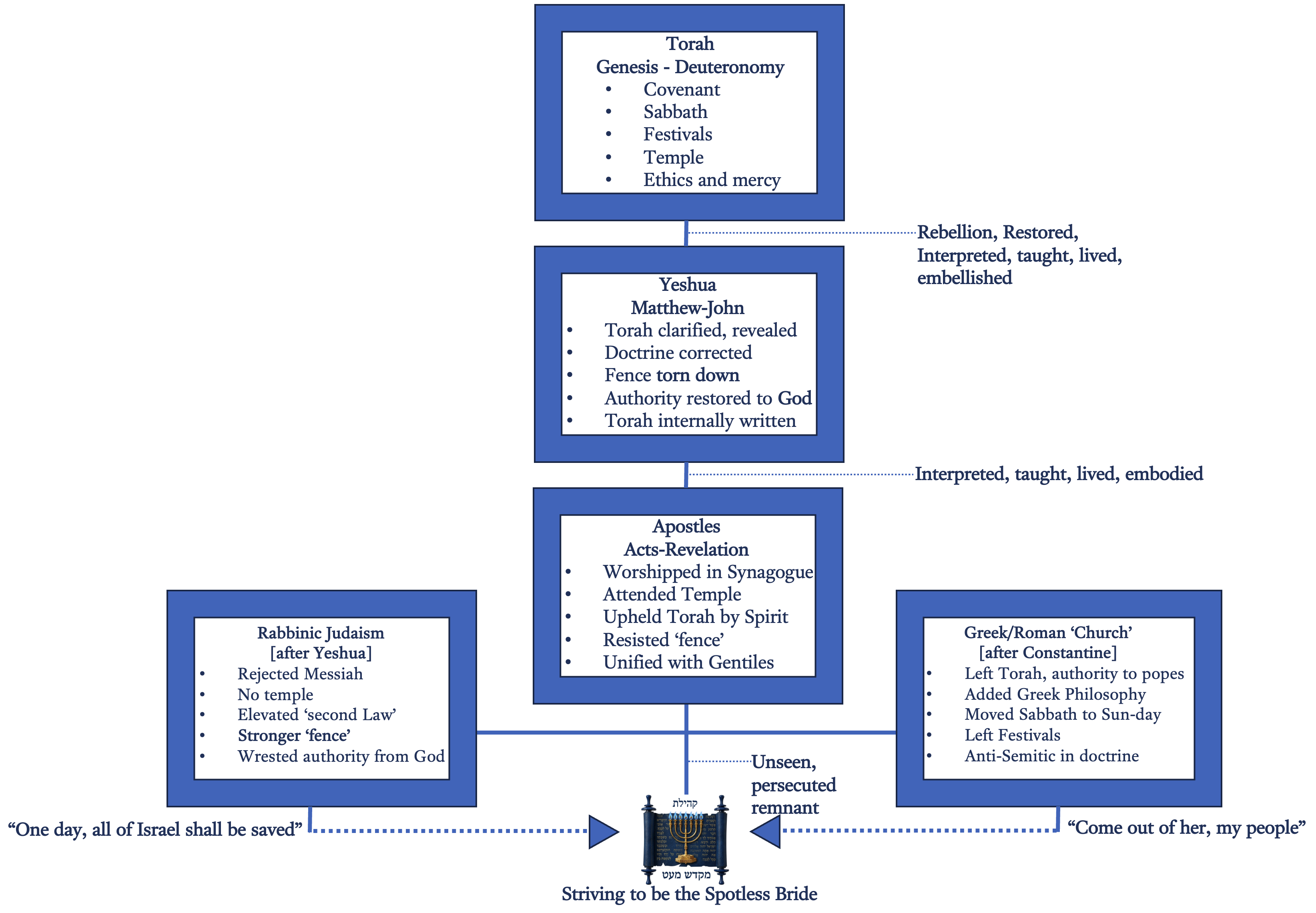
We write to you with deep respect for our shared heritage in the Torah and the Prophets, and in the hope of clarifying a matter central to our faith in Yeshua, our Messiah. Our aim is not to rebel against the “Judaism” of antiquity, but to embrace the path set forth by Yeshua Himself, who is now our only Rabbi in all matters of faith and practice [Matt 23:8].
Throughout Scripture, Yeshua is explicitly called Rabbi (John 1:38; Matthew 26:25), as is John the Baptist (John 1:6-7, 38), highlighting their unique authority to teach the truth of God’s Word. Those are the only two men in the Holy Scriptures who are named as “Rabbi”. Notably, the Apostle Paul, though deeply learned and a former Pharisee, is never called “Rav Sha’ul”, and never signed his letters as “Rabbi,” even though he could have, demonstrating that ultimate authority rests in the Messiah, not human teachers (Acts 23:6; Romans 1:1-5).
We affirm the sanctity and primacy of the Name of יהוה . Aramaic Peshitta texts use the term מריא / Marya to render the Name of God, suggesting that Aramaic predated the Greek translations, especially in capturing the Divine Name. If the Name had been conveyed from Greek, we would expect the term Maran; the use of מריא / Marya with precision demonstrates the original reverence and accuracy preserved in Semitic texts.
Our practice of honoring the Name and following Yeshua as our Rabbi does not reject the Torah or the teachings of ancient Judaism. Rather, it corrects deviations introduced by later Rabbinic interpretations that deny Yeshua as Messiah.
We also wish to address practical observances where Rabbinic “additions” have created burdensome rules that go beyond the Torah. For example:
-
Kosher eating: Scripture commands clean and unclean distinctions (Leviticus 11), yet modern Rabbinic standards impose extra restrictions—certain food combinations, certification requirements, separate dishes/kitchens, or even commercial preparation rules—that the Torah itself does not mandate. We honor Biblical kosher requirements, trusting Yeshua to sanctify all things for His people (1 Timothy 4:3-5).
-
Shabbat observance: The Torah prescribes rest and sanctification (Exodus 20:8-11; Deuteronomy 5:12-15), yet some Rabbinic traditions declare activities like lighting the stove, tearing toilet paper, dining out, or using transportation on Shabbat as “breaking the law.” While we fully honor Shabbat, we recognize Yeshua as the Master of the Sabbath (Mark 2:27-28), and we follow His guidance rather than human traditions that impose guilt or fear.
-
Other modern Rabbinic restrictions: From ritual minutiae to prohibitions that are not found in Scripture, many of these rules can weigh heavily on believers, creating confusion about what is required versus what is imposed by men (Colossians 2:20-23), and dividing the Body of Messiah.
Our call is not to abandon Torah but to return to its intended purpose: to glorify יהוה and walk in obedience under the authority of the Messiah, Yeshua, the Son of God. By following Yeshua as our only Rabbi, we honor God’s law in its true spirit—freed from man-made chains, yet fully devoted to His will.
We invite you, our Jewish brothers who follow the Rabbis, to consider this path not as rebellion, but as faithfulness—faithfulness to the God of Israel, to The Name He has revealed, and to the One Teacher who perfectly fulfills the Torah and the Prophets. Let us walk together, guided by Yeshua, our Rabbi, who alone is the source of truth, life, and freedom.
In His Name,
Overseer and Elders of Mikdash Meh’at
Deeper explanation of our treatment of His Name