



To our beloved brothers and sisters in Messiah,
We come to you humbly, with hearts burdened for unity and truth. On behalf of our fellowship — and in light of what we have taught on this site (mpfellowship.com) and in our writings — we ask you to consider carefully what we believe, what we reject, and why we differ from common mainstream formulations of “the Trinity.” This is not a rebellion, not a denial of Scripture, but a plea for understanding.
We express who Yeshua is the way both He and the Apostles did: He is the Son of God, who has a relationship with The Father. He has been given all authority, and one day will return all the things to The Father. Yeshua is God’s Son…thus, He is Divine.
What we affirm — our love for Elohim, and for Yeshua
-
We affirm the absolute unity of God (Elohim), as proclaimed in the Shema: “Hear, O Israel: יהוה our Elohim, יהוה is one.” (Deut 6:4; cited on our site).
-
We believe that Yeshua (the Messiah) is divine, eternal, preexistent — the “Word” who was “with God in the beginning.” We thus recognize His divine identity and honor Him as Messiah and Savior.
-
We also maintain that He is fully human, now glorified and seated at the right hand of the Father — not that the Father “became man,” but that the Son, who came “out of God,” took on human flesh, and now remains a man, glorified.
-
We believe the “Spirit” (Ru’akh / Holy Spirit) is not a separate “third person” in some tri-personal “godhead”, but rather the breath, power, presence, and expression of Elohim — the way the One God acts, moves, fills, inspires.
-
We uphold the centrality of Yeshua’s Sonship: our authority comes from the fact that He is the Son of God, sent by the Father. Through Him we come to the Father. As Scripture says, “one mediator between God and men, the man Messiah Yeshua.” (1 Tim 2:5).
In short: we see one undivided Elohim; and we see that Elohim reveals Himself in His Son, through His Spirit — not as a confusing multiplicity, but as unity manifest in relationship, mission, and revelation.
What we reject — Modalism, Arianism, heresy
We explicitly reject:
-
Modalism — the idea that “Father,” “Son,” and “Spirit” are merely different modes of the same person. We do not claim that the Father is the Son or that the Spirit is just a “third mode.”
-
Arianism (in the sense of teaching that the Son is a created, lesser being, or not truly divine). We believe Yeshua is divine — eternally existing, preexistent, the “Word,” equal to God in nature (d’var Elohim ≡ “Word of God”), yet distinct from the Father in personal identity, and subordinate in regard to authority.
-
Philosophical speculations that force “substance-sharing” (homoousios) or “three-person” ontology in a Greek philosophical sense, which we believe distort the Hebrew context and the simplicity of biblical revelation.
We are neither “third-century Greek speculators” nor “system-builders” imposing definitions upon Scripture. We simply accept what Scripture — especially in Hebrew and in its first revelations — actually communicates in the plain reading of the texts.
Why we interpret key Scriptures differently — some examples
[Reference scriptures here or in your own version]
-
-
John’s Gospel 1:1 — “In the beginning was The Word [HaDavar], and He, The Word [HaDavar], was within the form of God [Elohim], and The Word [HaDavar] belonged to Elohim.” (John 1:1)
-
We see: the “Word” was with God, showing distinction; yet the Word was “Divine” (divine in nature ). This shows that the divine nature was in Him, but not that He was the same person as the Father. The Word is God’s Will in action, not ‘reason/logic’.
-
- Colossians 2:9 – “For in Him [Yeshua] is embodied all the fullness of the divine.
- The word ‘godhead’ is not in original scripture. It was a coined term to support a doctrine. Paul tells us that we should be filled with that same fulness. That does not make us “God”. (Eph 2:19)
-
John 8:42; John 16:28 — The Son says He came from out of God and was sent by the Father.
-
That language of coming out of shows shared divinity, and being “sent from” argues for personal distinction, not identity.
-
-
Hebrews 1:3 — The Son is “the radiance of His [the Father’s] glory and the exact imprint of His nature.”
-
He bears the Father’s nature, representing Him perfectly — but that does not mean He is the Father in person.
-
-
-
-
Philippians 2:6–11 — “[He] existed within the form of God … did not count equality with God a thing to be grasped …”
-
This shows pre-existence and divine status — yet also submission, humility, divine humanity, and bringing glory ultimately to the Father.
-
-
-
-
Isaiah 9:5 (6) — Prophetic Hebrew says the Messiah will be called “Mighty God (El Gibor) Everlasting Father Prince of Peace.”
-
We interpret this not as literal identity with the Father, but as prophetic titles expressing that Messiah will carry God’s power, authority, eternal dominion, and will represent God to us. [Commas did/do not exist in Hebrew Scriptures]
-
- 1 Timothy 3:16 — “God” manifest is a ‘mystery’
- This is a mistranslation, rather, an alteration. LATER Greek writers added “god” to the verse. The original Greek says “He”; and this matches the Aramaic version. “He”, contextually, is “Yeshua”.
- The ‘mystery’ is that the Word is the manifestation of God’s authority in Yeshua’s flesh and blood body, not that “God” became a man.
- John 20:28 — Thomas called Yeshua “God”
-
- The Greek itself doesn’t demand “ontological” replacement, where all of a sudden God the Father does not exist: ho kurios mou kai ho theos mou
- This is recognition of role, or representation, especially in confessional speech. Thomas is responding to what he is seeing God do through the risen Messiah. He understands that God is manifested in the risen human being standing before him.
- In Aramaic, the phrase functions as acknowledgment, not metaphysical definition. Aramaic regularly uses Alaha in contexts of divine authority vested in a person acting fully on God’s behalf. “God is here and acting through you”…
- This is agency, just like when Yeshua manifested as the “Messenger of יהוה ” [angel of the LORD] and The Word of יהוה [Word of the LORD] in the OT. This is best seen in Genesis 18-19:
- Three ‘men’ appear to Avraham. He feeds them and washed their feet. יהוה spoke [18:13-14, 17, 20, 22]. Two of them leave, Avraham draws near to the one who remains, still speaking [v. 26, 28-32] And then יהוה also destroys S’dom FROM HEAVEN, while the ‘men’ are still on earth. [Gen 19:24]
- This is agency of authority, where the authority of God manifests in an agent, NOT “God” on earth in HIS physical being.
- This is agency, just like when Yeshua manifested as the “Messenger of יהוה ” [angel of the LORD] and The Word of יהוה [Word of the LORD] in the OT. This is best seen in Genesis 18-19:
- Thomas heard all the language of agency that Yeshua had already spoken. As a Jew, He is acknowledging God’s manifestation in the man risen from the dead, proving He is Messiah. This is in no way “You have now become the Most High: God is gone, the Father is inside of you”.
-
- Ru’akh / “Spirit of God” passages — e.g. Genesis 1:2 (Spirit hovering over the waters); Psalm 104:30, Isaiah 63:10-11, etc. — show Spirit as God’s breath/presence/power, not as a separately “personal” entity.
Why we feel compelled to make this plea
We understand that to many Christians our view may seem foreign, or even dangerous — perhaps as though we are denying a long-held ‘truth’. But please — before dismissing us as “heretics,” hear us.
-
We deeply love Scripture, and seek to anchor everything in the original language, Jewish context, and the earliest revelations of Elohim.
-
We worship Yeshua with all our hearts — not as a mere man, nor as a second-class being, but as divine, eternal, preexistent, our Messiah, the Word of Elohim.
-
We believe that the “one God” remains undivided, yet reveals Himself in His Son, by His Spirit — just as God has always worked, from the Garden, through the prophets, through the Messiah, and through the Body of Messiah.
-
We refuse to reduce God to Greek philosophical categories; we prefer the simplicity of biblical truth.
We stand before you now, calling on the wider Body of Messiah: please grant us — and more importantly, grant the Scriptures we follow — the benefit of careful, gracious, prayerful consideration. If we are in error, let Scripture convict and correct us. But if our understanding stands firm under the Word, grant us unity — not uniformity — in the fear of Elohim and in love for Messiah.
We are not Modalists, we are not Arians, we are not heretics. We simply believe — and seek to teach — that one God/Elohim reveals Himself through His Son, by His Spirit; and that Yeshua, the Messiah, is divine — yet distinct in person, glorified in heaven, the mediator, between us and the Father, the Son.
May the God of Avraham, Yitz’khak, and Ya’akov guide us into all truth, build up His body in love, and preserve the unity of the Spirit in the bond of peace.
With sincerity and love in Messiah,
Overseer and Elders of Mikdash Meh’at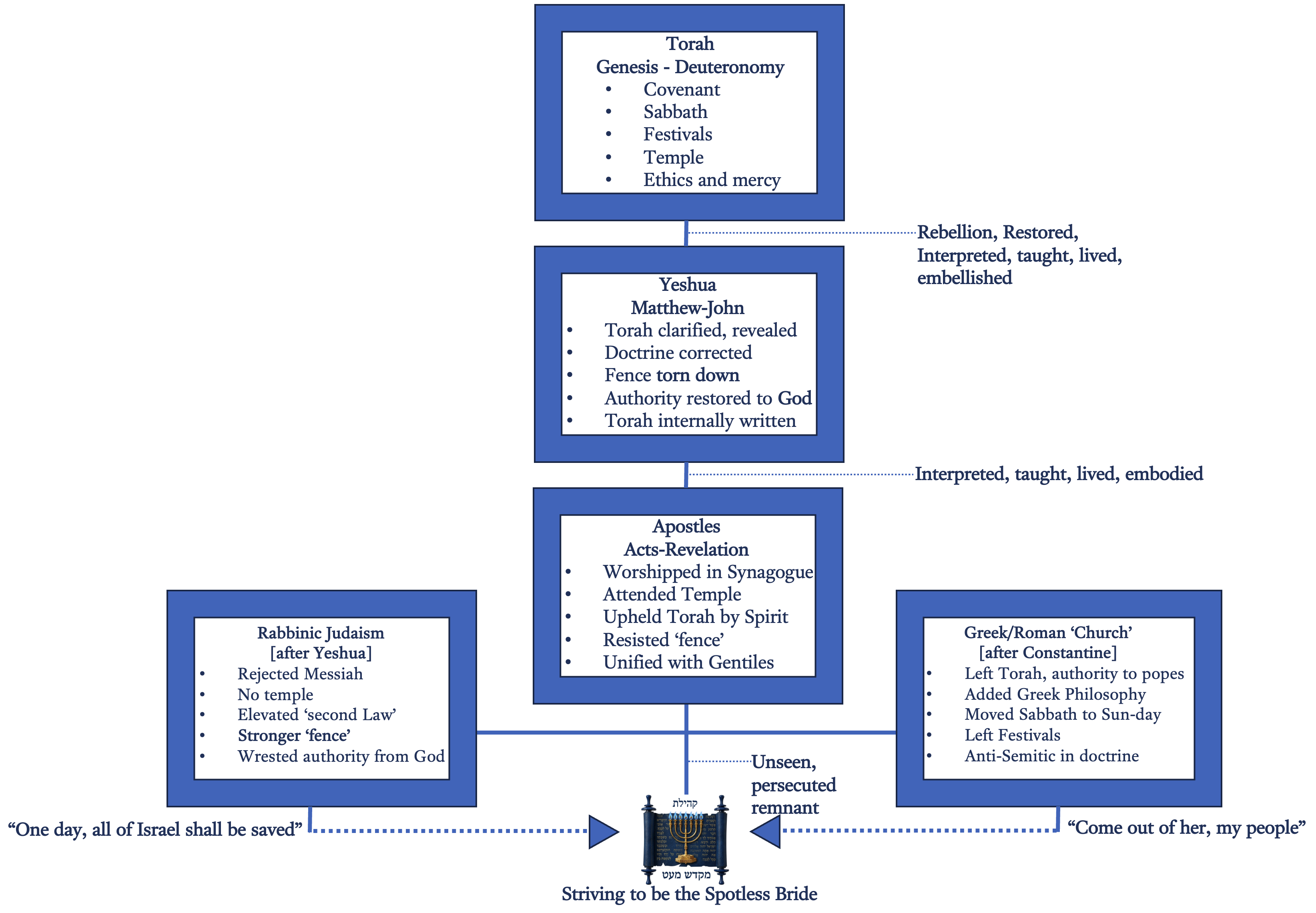
-
